Quality Roof Repair
In Great Falls, your roofing must handle strong ultraviolet, powerful gusts, deep snow, and temperature fluctuations. Metal roofing systems typically outperforms standard asphalt by withstanding impact, fire, uplift, and accelerated weathering, and moves snow off with greater efficiency. Monitor for cracked shingles, flashing gaps, leaks, granule loss, and roof sags following storms. An experienced roofer in your area will examine the decking, underlayment, ventilation, assess storm-related damage, then propose repair or replacement according to lasting performance.
Important Information
- Great Falls roofing must endure strong ultraviolet, powerful gusts, deep snow, and thermal cycles that worsen leaks and cause component degradation.
- Metal roofing remains functional 40 to 70 years, withstands wind forces, fire, and impact damage more effectively than standard asphalt, and moves snow with greater efficiency.
- Asphalt shingles offer reduced starting prices but decline faster normally, experiencing curling damage, cracking, and granule loss in Great Falls seasonal patterns.
- Red flags include cracked shingles, flashing gaps, rusted valleys, stains on ceiling, condensation buildup, plus weather damage across various roof slopes.
- Roofing experts in Great Falls complete inspections, leak diagnostics, storm repairs, emergency tarping, and professional metal roof installation featuring appropriate underlayment and flashing.
Ways That Great Falls Climate Affects Roof Performance
Your roof in Great Falls deals with strong sunlight, strong wind, hailstorms, snow loads, and rapid temperature swings creating continuous stress that reduces lifespan. Ultraviolet radiation removes moisture from roof materials, deteriorates sealant materials, and increases surface degradation. High wind lifts edges, sends moisture into weak seams, and separates flashing materials at penetrations.
Snow loads adds weight, while ice dams block liquid around the eaves and increase chances of leaking. Temperature cycling widen minor cracks, open roof seams, and harm underlayment materials. Hail damage protective surfaces, crack coating layers, and reveal substrates to water intrusion. You additionally experience localized climate impacts: south-facing sections warm faster, areas in shade remain moist more time, and windward areas wear harder. Periodic inspections enable you spot storm damage early, maintain drainage routes and increase performance through extreme temperature swings.
Metal Roofing versus Shingles in Great Falls
If you assess metal systems against asphalt shingles in Great Falls, the selection frequently centers on climate durability, lifespan, maintenance, and lifetime expenses. Metal panels resist impact, fire, and wind more effectively than shingles, and they generally endure 40 to 70 years rather than 15 to 30.
In most cases, you'll allocate more in the beginning for metal materials, however you may replace it more infrequently and perform reduced repairs. Typical shingles amount to less initially and present basic spot repairs, despite the possibility that they may curl, deteriorate, or shed granules quicker. Metal materials supports smooth water shedding, which can decrease roof snow loads when suitably installed with protective trim. If you are planning for integrating solar power, metal generally offers straightforward installation solutions and minimal roof openings. The best option for you is determined by your budget, the length of time you'll own it, and your comfort with maintaining it
Why Metal Roofing Performs in Montana
Built for temperature swings, powerful gusts, deep snowfall, and strong sun exposure, metal roofing excels in Montana's demanding weather conditions. You gains a mechanism that manages temperature changes, rapidly removes moisture, and sustains building integrity amid freeze-thaw situations. Interlocking metal components, concealed attachments, and state-of-the-art coatings limit wind damage, rusting, and sun harm.
Furthermore, you benefit from rapid snow shedding, which reduces static roof weight and protects roof framing. Given that metal roofing bounces radiation from the sun, it helps limit unwanted attic warmth during scorching, arid months. Low water absorption capability supports consistent function when faced with icy and snowy conditions. Durability of metal roofing is crucial in the state, where persistent weather impacts shortens weaker roofing solutions. Utilizing quality underlayment, sufficient ventilation, and skilled installation, the roofing remains durable, efficient, and stable for decades with minimal maintenance requirements.
Signals You Need Roof Repairs
Finding roof damage right away safeguards you from structural compromise, water leaks inside, and expensive replacement fees. Inspect cracked or split shingles, lifted or peeling flashing, visible bolts, corroded valleys, and caulk breakdown at vents, skylights, and chimneys. In the interior, search for roof stains, moist insulation, fungal damage, or holes showing sky through decking.
Post-storm, search for collision marks, displaced metal, and granule debris in gutters. Loss of granule particles supports detection of weakened asphalt sections before water gets through the underlayment. Limited attic air circulation also brings about alarm indicators: excessive warmth, frosting, moisture accumulation, and early-onset curling. If electric bills rise without reason, excess humidity and heat could be compromising the roof.
Book repair services should you notice low-hanging sections, continuous water leaks, or wobbly trim. Immediate action shields decking, insulating material, and finished spaces.
Reasons Why Roof Replacement Presents More Sense
You should evaluate replacing your roof when storm damage impacts extensive areas, damages structural components, or exceeds reasonable repair costs. If you're constantly spending for recurring leaks, failed patches, or frequent service calls, a new roof typically gives superior long-term savings. An older roof system near or past its expected lifespan cannot reliably protect your home reliably, despite isolated repairs can appear feasible.
Extensive Weather Damage
When a major storm damages extensive areas of your roofing, a full replacement typically provides more financial and structural sense than multiple repairs. Following hail damage, wind uplift, or branch punctures, you may experience compromised decking, wet underlayment, and widespread shingle failure that repairs can't reliably isolate.
You require a comprehensive evaluation, not patchwork. Storm forces often damages seal integrity, loosens fasteners, and forms hidden moisture routes around valleys, vents, and flashing. Even after debris removal, standing water may continue degrading insulation and sheathing underneath. If deterioration affects several slopes or exposes the roofing system, replacement provides uniform protection, code compliance, and manufacturer-backed performance. It also allows you upgrade underlayment, ventilation, and impact-resistant materials so your next Great Falls storm won't exploit the same vulnerabilities again.
Repeated Maintenance Costs
Often, repeated leak repairs, shingle replacements, and flashing repairs accumulate higher costs than a planned roof replacement. If you're requesting maintenance each season, you're probably caught in spending cycles that drain your budget without addressing deck, ventilation, or underlayment problems. Minor repairs may restore temporary function, but they seldom provide comprehensive performance.
You need to compare annual repair totals versus replacement pricing, rising labor costs, and material compatibility issues. Multiple repairs additionally create warranty gaps, particularly when multiple contractors handle different sections or different product lines. These gaps can leave you paying out of pocket when new failures appear around earlier repairs. A full replacement provides you one integrated assembly, consistent installation quality, and streamlined maintenance schedules. In many cases, that reset lowers long-term roofing costs and minimizes operational disruption markedly.
Deteriorating Roof Structures
water intrusion following severe weather. At that stage, patching symptoms won't address widespread decay.
Replacement makes greater sense when inspections show water damage in decking, extensive granule erosion, insulation deterioration, or poor ventilation balance that intensifies thermal and moisture stress. You must also consider code upgrades, fastening capability, and flashing integration with newer materials. Complete replacement lets you correct hidden defects, improve drainage, and establish a configuration rated for current snow, hail, and wind demands. You'll spend more upfront, but you'll reduce emergency restoration, water damage to interiors, and comprehensive lifecycle expenses.
Great Falls Roofers' Storm Damage Response
Because severe weather can damage roof structures in minutes, Great Falls roofing professionals start damage assessment with a fast, systematic inspection of roofing components, fasteners, layers, roof deck, and metal surfaces to locate both obvious damage and concealed moisture paths.
After initial storm evaluation, you receive detailed documentation of damage, moisture intrusion, and structural risk. Roofers perform debris removal initially so fallen limbs, ice chunks, and loose objects stop scraping the roof or obstructing water flow. They cover vulnerable areas, seal punctures, reinstall shifted shingles, refasten flashing, and verify fastener condition on metal areas. Should moisture penetrate decking, they'll test for saturation, delamination, and mold-prone zones before approving repairs. You also get photos and measurements that substantiate insurance documentation and assist in ranking critical fixes versus appearance-related work.
Metal Roofing Installation Procedures
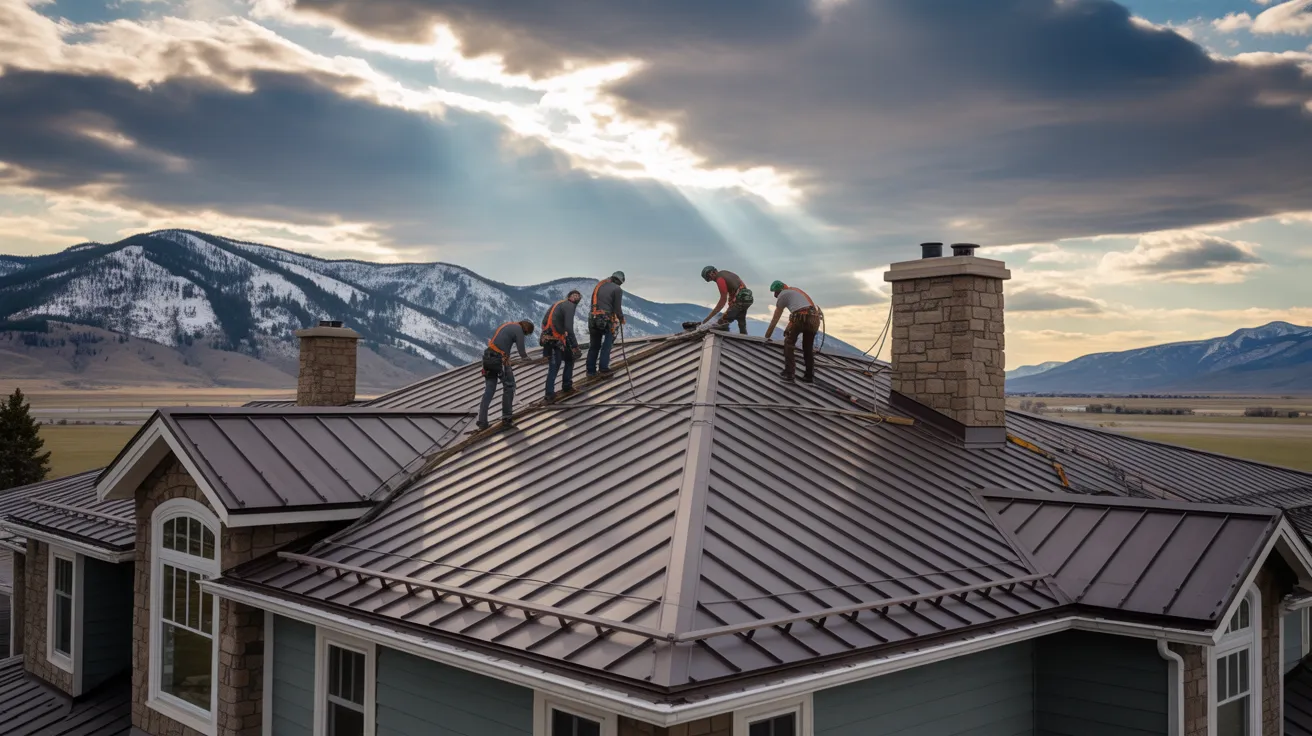
From initial removal through final components, metal roofing installation process maintain required order protecting residences and assuring system function. Old roofing takeoff starts initially, assessment of decking takes place, and damaged deck sections get substituted. Pitch check, dimension confirmation, air circulation path review, and fastener location marking follows for accurate panel placement.
Following this, boundary metal parts, weather blocking layers, and underlayment alternatives are selected according to regional weather, roof angle, and building codes. Sheets begin from a square baseline, with fasteners meeting manufacturer standards. In standing seam setups, seam edges are bound and kept straight managing moisture flow and heat movement. To complete installation, penetrations are sealed, ridge and trim parts get installed, transitions are protected, and completion inspection ensures waterproofing and visual finish.
Services Great Falls Roofing Experts Offer
For any routine repairs or new roof installations, Great Falls roofing experts typically manage assessments, leak diagnostics, weather damage repairs, reroofing, new roof installation, and maintenance services for both residential and business structures.
Additional work you can contract them for involve flashing updates, ventilation improvements, gutter installation, skylight maintenance, and ice dam prevention. When hail or wind damage decking, they'll perform emergency tarp coverage to prevent water penetration until permanent repairs begin. With mature systems, they inspect underlayment condition, fastening systems, roof penetrations, and drainage systems, then propose repair solutions or full replacement when appropriate. Many contractors maintain shingle roofing, metal standing seam, low-slope roofing, and protective coatings. They can photograph injuries for claim documentation and plan seasonal maintenance to identify sealant issues, corrosion, panel looseness, and clogged roof valleys before these issues diminish your roof lifespan.
How to Find the Right Great Falls Roof Contractor
Upon selecting a Great Falls roofer, you should confirm that they have correct credentials and carry active liability insurance and workers' compensation coverage. Following this, assess the roof materials they suggest so that you can align performance metrics, durability, and expense with the job. It's also important to evaluate their regional expertise, given that professionals who understand Great Falls climate conditions and code requirements usually deliver superior results.
Verify Licensing And Insurance
Earlier than finalizing a roofing contract in Great Falls, verify the roofing professional maintains the necessary Montana professional license and holds workers' compensation insurance and general liability coverage. Never rely on verbal claims. Request the license identification, company name, and insurer information, then execute licensing verification by using state licensing records and local registration databases. Match the business name on all document.
To confirm insurance confirmation, inquire that current documentation be sent straight from the insurer or agent. Check policy numbers, effective dates, coverage limits, and policy exclusions. Verify that workers' compensation insurance protects all worker working
Evaluate roof options
With Great Falls roofs subjected to hail, strong winds, heavy snow, and dramatic temperature changes, you must compare materials across durability, lifespan, upkeep requirements, and overall installation expenses—rather than focusing on the bid price alone.
Asphalt shingles commonly feature the most economical installation cost, yet impact resistance ratings, wind warranties, and granule deterioration prove essential. Metal requires greater upfront spending, however it channels snow away, provides fire protection, and delivers better thermal performance through reflective finishes. Synthetic slate and composite shingles lighten structural load while strengthening impact protection, even though material quality varies. Obtain product documentation about Class 4 impact ratings, wind uplift performance, ice dam prevention, and anticipated longevity. You need to analyze underlayment options, ventilation requirements, fastening protocols, and repair accessibility. A inexpensive roof becomes pricier later if it wears out early or requires ongoing storm maintenance and replacement.
Assess regional experience
Material selection matters, but the roofer's local track record often dictates whether that installation performs in Great Falls. You should verify how long a contractor operated in the region and whether they've handled hail damage, heavy snow, chinook winds, and freeze-thaw damage on similar homes. Local history reveals whether crews understand ventilation systems, ice dam prevention, flashing specifications, and Cascade County building codes.
Seek locations of recent work, then evaluate workmanship from the street level. Review Contractor testimonials for tendencies: promptness, jobsite cleaning, warranty handling, and estimate accuracy. You also need to check material supplier ties and permit familiarity, since established local contractors source stock faster and resolve inspections speedily. A contractor boasting proven Great Falls experience cuts installation risks and strengthens roof durability long-term for your property.
Common Client Queries
Do Great Falls Roofers Provide Financing plans for New roofing?
Yes, many Great Falls roofers provide financing options for new roofs. You typically can select financing arrangements through the contractor or an outside lender. Expect conditions based upon project cost, loan length, and your credit profile. Most lenders require credit checks before approval, and some offer promotional rates for qualified applicants. You must review APR, fees, down payment requirements, and prepayment terms before signing any roof financing contract.
Are roofing estimates in Great Falls typically at no cost?
Yes, roofing estimates in Great Falls are typically without charge, particularly when contractors give complimentary inspections for repairs or replacements. You should expect a formal estimate that specifies materials, labor, timeline, and cost breakdowns. Some companies may bill for detailed reports, specialty diagnostics, or insurance documentation. Before you schedule, determine what the estimate covers, whether inspections are complimentary, and if added fees apply to complex roof conditions or access.
What is the typical duration of roofing warranties in Great Falls?
Like a protective shield for your roof, warranties in Great Falls usually last 20–50 years for Manufacturer warranties, timely resource depending on material and product tier. You'll often get Labor warranties for 2–10 years, though some contractors give longer coverage. You should ensure what's prorated, transferable, and excluded, especially for wind, ventilation, and installation errors. Review the fine print so you realize exactly what protection you're actually buying before signing.
Can roof work be scheduled during winter in Great Falls?
Yes, you can arrange roof work during winter in Great Falls, but you'll require weather-dependent planning. You can complete Winter repairs with safety when crews track temperature, wind, ice, and material handling limits. You should plan on delays during storms or extreme cold. Clearing snow often comes first so workers can access decking, identify leaks, and secure flashing. You'll achieve better results when you book early and be flexible with scheduling windows.
Do Great Falls roofing companies help with insurance paperwork?
Yes, many roofing services in Great Falls support you with insurance forms after damage from storms or impacts. You'll often obtain insurance help through documented inspections, photo evidence, scope summaries, and estimate comparisons. They may also support claim coordination by connecting with adjusters, explaining repair quantities, and corresponding line items to policy coverage. You should still check your claim carefully, because your insurance company authorizes payment terms, depreciation, deductibles, and final settlement amounts.
Summary
In Great Falls, your roofing system has to handle wind, snow, hail, and quick temperature swings without failing. That's why choosing the roofing company matters. Metal roofing stands out because it can endure 40–70 years—often two to three times longer than asphalt-based shingles. When you act early on repair or replacement, you protect your home, decrease ongoing costs, and improve performance. Partner with Great Falls roofing specialists who know local conditions and fit systems built to last.